
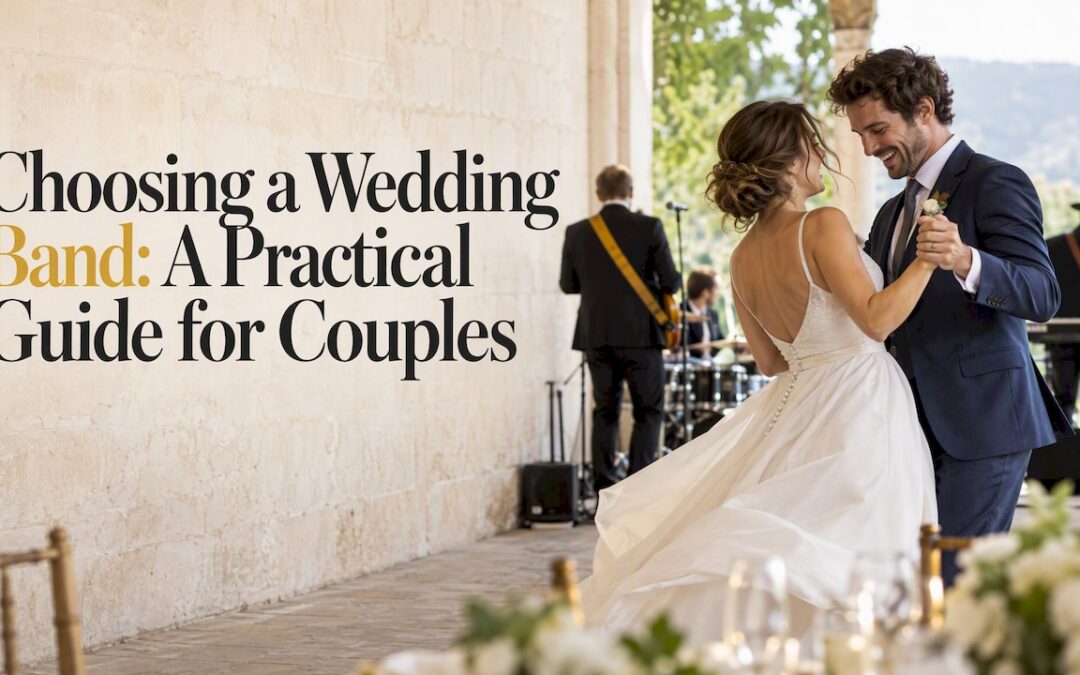
Choosing a wedding band comes down to five decisions: the energy you want on the dance floor, the lineup size your room and guest list can support, the repertoire, the logistics (sound rules, power, space, breaks), and the contract. Get those right and the band takes care of the rest. This guide walks through each one in the order you will face them, with the questions to ask and the traps to avoid.
We are Lost Wax, a mashup party band that has played weddings, corporate events and private celebrations since 2009. Everything below comes from that side of the stage, plus a few outside sources where a fact needed checking.
TL;DR
- Start with the dance floor, not the playlist: decide whether you want a packed floor all night or a polished background with a few big moments.
- Match lineup size to your guest count, room and sound limits. A bigger band is not automatically a better one.
- Watch recent live footage of a full performance, not just a highlight reel, and ask how the band handles requests, breaks and your must-play list.
- Check venue rules for volume, load-in and power before you fall in love with anyone.
- Book early for peak dates and get everything in a written contract. Our wedding band packages are a good place to compare lineups.
Table of Contents
- Start with the feeling you want, not the genre list
- Pick the lineup size that fits your room and guest list
- Look at repertoire and how the band plays it
- Check the venue before you fall for a band
- Questions to ask every band you interview
- When to book
- Read the contract like it matters
- Perspective: what we have learned playing weddings since 2009
- How to compare your shortlist
- Where Lost Wax fits
- FAQ
- Sources
Start with the feeling you want, not the genre list
Most couples open the search by asking what genres a band plays. A better first question is what you want the night to feel like at 9:30 p.m.
There are really three versions of a wedding reception:
- The party. Grandparents, college friends and coworkers are all on the floor. Songs change often, and the band reads the room.
- The dinner-and-dancing evening. Music supports conversation for most of the night, with two or three dance blocks.
- The ceremony-and-cocktail soundtrack. Live music matters most before the reception, and dancing is a smaller part of the plan.
Be honest about which one you are planning. A band that is brilliant at version one can feel like too much for version two, and a refined jazz trio will struggle to carry version one. Tell every band you speak with which version you want. How they respond tells you a lot.
If you are torn between live music and a DJ, we wrote a separate piece on what to ask vendors on both sides. The short version: The Knot notes that a DJ suits couples who want specific studio recordings, while a live band suits those who want a particular energy or genre. Some couples want both, and a band with an optional DJ integration covers that.
Pick the lineup size that fits your room and guest list
Band size is the decision couples most often get wrong, usually by assuming bigger is better. What matters is how the lineup fits your space, your guests and your sound limits.
Here is how we think about the lineups on our packages page:
| Lineup | What it tends to suit |
|---|---|
| 5-Piece Band | Intimate to mid-size receptions, tighter rooms, venues with stricter volume rules, couples who want a high-energy party without a big stage footprint |
| 8-Piece Band | Mid-size weddings that want a fuller sound, with room for horns or additional vocals depending on the show |
| 10-Piece Band | Larger guest lists and rooms where you want impact and variety, our most common choice for big dance floors |
| The Collective | Couples who want a more customized, flexible approach to the lineup and the show |
For larger productions, our ELITE 14-Piece and SHOWSTOPPER 18-Piece bands are built for ballrooms, galas and weddings where the music is meant to be a centerpiece.
How to decide between two sizes
- Count the square footage on the dance floor, not just the room. A band needs a stage or a defined performance area, and guests need space to move.
- Ask what the extra players add. More musicians should mean more texture, more vocal range and more song options, not just more volume.
- Think about the quietest moment. A good large band can pull back for toasts and the first dance. Ask to hear how they do it.
- Consider your guest mix. A crowd spanning several generations benefits from variety. That is where a larger lineup earns its place.
If you are still between two sizes after that, tell the band your guest count and venue and ask which they would recommend. A good band will sometimes recommend the smaller option.
Look at repertoire and how the band plays it
A song list on a website tells you very little. Every cover band can claim to play pop, rock, hip-hop and R&B. What you need to learn is how they play it.
Ask about transitions. A band that stops between every song gives guests a chance to wander off the floor. Bands that blend songs together keep the momentum up. This is the core of the mashup format: we fold genres into one another so a Motown classic can slide into a current hip-hop hit without the floor emptying.
Ask how the setlist is built. You want a band that takes your must-play and do-not-play lists seriously and then builds the rest around your guests, not one that runs the same show at every wedding. Ask how much of the set is customizable and how far ahead you need to submit your input.
Ask about requests on the night. Some bands welcome them, some refuse. Neither is wrong, but you should know which you are getting, and what happens when a guest asks for something outside the plan.
Ask about the first dance and special moments. Does the band learn a song for you? Can they play a ceremony processional? Who handles cues for introductions, cake cutting and the last song?
Watch the right video
A highlight reel is the band’s best three minutes. Ask for a full-song clip from a recent wedding, ideally one shot on a phone from the back of the room. You are watching for three things: whether guests are actually dancing, whether the sound is balanced, and whether the musicians are engaging with the crowd or just playing at it.
Reviews help too. Look for ones that mention the planner or venue coordinator as well as the couple, because they show how the band behaves behind the scenes. You can read what our clients say on our reviews page.
Check the venue before you fall for a band
This is the step couples skip, and it causes real trouble. Some venues have strict rules about amplified sound, load-in times, power access and curfews.
Some historic buildings and city venues use a sound limiter, a device that cuts power when volume passes a set level. FixTheMusic describes how limiters work and why they are hard on amplified bands. If your venue has one, you want a band with experience in that situation: compact lineups, controlled stage volume, and a sound plan to match.
Ask your venue coordinator these questions before you sign with any band:
- Is there a decibel limit, and who enforces it?
- Where does the band load in, and at what time?
- How much stage or floor space is available?
- What power is available, and on how many circuits?
- What time must music stop?
- Are there restrictions on lighting, haze or fog?
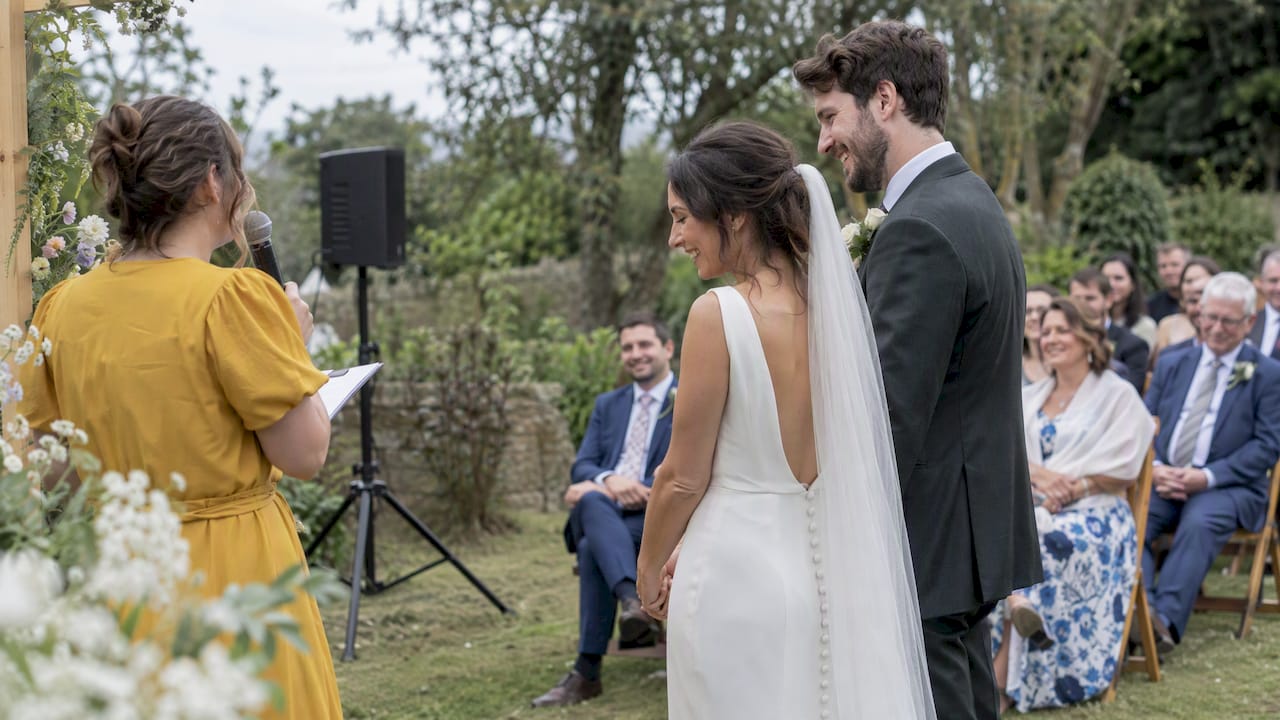
Sound affects more than the party. If you are hiring a videographer, the band’s volume and your ceremony audio will all end up in your wedding film. This UK-focused guide on keeping vows audible in wedding video is a useful read for planning the ceremony sound with your vendors, even if your wedding is outside the UK.
We have played many venues across the Midwest and know how different they can be. If you are planning a wedding at one of them, our venue pages can help, such as Rose Music Hall in Columbia, The Englert Theatre in Iowa City, Old Warson in St. Louis and Brick and Mortar in Wichita.
Ceremony and cocktail hour audio
Bands often stop thinking at the reception, but your ceremony needs sound too. Microphones for vows, music for the processional and a clean sound system for officiants are easy to overlook until the day itself. If you want one team to handle it, ask whether the band offers ceremony sound and wider production such as lighting, staging and dance floor rentals. We cover these on our production page.
Questions to ask every band you interview
A good first call is a conversation, not a sales pitch. Bring a short list. The Knot’s list of 36 questions is thorough, and Brides suggests confirming your date first so nobody wastes time. These are the ones we think matter most:
- Are you available on our date, and do you play another event that day? If they do, ask what happens if that event runs late.
- Who exactly will be on stage? Some bands send substitutes. Ask whether the lineup you watched is the lineup you are booking.
- What happens if a member is sick? You want to hear about a backup plan, and about backup equipment too.
- How long are the sets and breaks? And what plays during breaks?
- What do you need from us? Space, power, meals, a changing area, load-in time.
- Who is the day-of contact? Ideally someone who works directly with your planner or coordinator.
- Will you play our must-plays and skip our do-not-plays? Get that in writing.
- Can we talk to a recent couple or planner?
- Do you carry liability insurance? Some venues require proof.
- How involved do you want us in planning the night? Some bands hand you a form, others work with you on the flow.
The last question matters more than it seems. We build our shows around guests and planners as part of the process, because the best nights come from a band that knows your crowd and your timeline.
When to book
Popular bands fill up. The rule of thumb is to book as soon as you have your venue and date locked in.
Planning timelines vary by source and by market. A Swedish planning guide from Lovio recommends booking a live band 10 to 12 months ahead and notes that the best wedding bands often play only 15 to 20 gigs per summer. That is Sweden, and US peak seasons differ, but the logic holds anywhere: the strongest bands have limited weekend dates in peak months.
A practical US approach:
- Peak season Saturdays (spring through fall): start talking to bands as soon as the date and venue are set.
- Off-peak or weekday weddings: you have more room, but good bands are still in demand.
- Short timeline: contact several bands at once and be flexible on lineup size. A smaller band is often available when a larger one is not.
If you are narrowing a shortlist now, you can send us your date through the 10-piece wedding band inquiry form and we will tell you honestly whether we can make it work.
Read the contract like it matters
The contract protects you and the band. Before you sign, check that it spells out:
- Date, venue, load-in and performance times, including the number and length of sets
- The exact lineup and what happens if a member is replaced
- Deposit, payment schedule and cancellation or rescheduling terms
- Equipment, power and space requirements
- Overtime terms, in case the night runs long
- Whether your must-play and do-not-play lists are part of the agreement
- Any production services included, such as lighting, staging or dance floor
If anything is verbal, ask for it in writing. A professional band will be glad to do that.
Perspective: what we have learned playing weddings since 2009
We have seen the same pattern across hundreds of receptions. The couples who are happiest the next morning did not necessarily book the biggest band or the longest song list. They booked a band that understood their guests.
Here is what we believe:
- The dance floor is the metric. A beautiful reception with an empty floor feels different from one where the aunts, the groomsmen and the grandparents are all moving. We build our sets, and our transitions, around keeping people there.
- Genre-blending beats genre-hopping. Guests of different ages rarely share one favorite era. Mashups let a song from a parent’s youth and one from a guest’s playlist live in the same three minutes.
- Size should serve the room. We offer lineups from five pieces up to eighteen because a room that suits a tight, powerful five can be wrong for a full production, and the reverse is true too.
- Planners are partners. The smoothest nights are the ones where the band, the planner and the venue coordinator are on the same page long before the day.
- Be honest about fit. Not every band is right for every couple. If you want a quiet jazz trio for dinner, we will say so.
— Jimmy
How to compare your shortlist
Once you have three bands you like, put them side by side on criteria that actually separate them:
| Criterion | What to look for |
|---|---|
| Live footage | Full songs from recent weddings, with guests dancing |
| Lineup fit | Size suited to your guest count, room and sound limits |
| Setlist flexibility | Real customization, with a clear way to share your must-plays |
| Communication | Quick, clear replies and a named day-of contact |
| Production | Sound, lighting and ceremony audio handled or coordinated |
| Track record | Reviews that mention planners, venues and flow, plus recognized awards |
| Contract | Specific terms in writing, with no verbal promises |
Trust your gut on the call too. You will spend your reception with these people, and the best bands feel like they are as invested in your night as you are.
Where Lost Wax fits
We are a mashup party band that blends pop, rock, hip-hop and R&B for weddings, corporate events and private celebrations. We have been named Wed KC Band of the Year and are in The Knot Best of Weddings Hall of Fame. Lineups run from our 5-piece to the 18-piece SHOWSTOPPER, with optional DJ integration and production services including lighting, staging and dance floor rentals.
If you want to see which lineup fits your wedding, start on our packages page, or for the biggest shows see the ELITE and SHOWSTOPPER bands. If you are planning a corporate event as well, our corporate band page covers that side.
FAQ
How do I choose a wedding band if I have never hired one?
Start with the feeling you want on the dance floor, then set a lineup size that fits your room and guest count. Watch full live clips from recent weddings, interview two or three bands with the same questions, and check venue sound rules before you commit. Put everything you agree on in a written contract.
Should I hire a wedding band or a DJ?
A DJ suits couples who want exact studio recordings, and a live band suits couples who want a certain energy and genre. Vogue frames it as one of the most debated questions in reception planning. Many couples find a band with optional DJ integration gives them both. Our live band vs DJ guide lists the questions to ask each side.
How big should my wedding band be?
It depends on your guest count, the size of the room and any volume limits. Smaller lineups like a 5-piece often suit tighter spaces and strict sound rules, while larger bands bring more impact for bigger rooms. Ask each band which size they would recommend for your venue.
What should I ask a wedding band before booking?
Confirm availability, the exact lineup, backup plans for illness or equipment failure, set and break lengths, space and power needs, and who your day-of contact is. Ask whether your must-play and do-not-play lists will be honored. The Knot has a longer checklist you can bring to calls.
Sources
- How to Hire a Live Wedding Band That’ll Wow Your Guests, The Knot
- Questions to Ask a Wedding Band, The Knot
- 50 Questions to Ask Your Wedding DJ or Band, Brides
- How to Hire the Perfect Band for Your Wedding, Vogue
- Boka bröllopsleverantörer, Lovio
- Wedding Bands for Venues with Sound Limiters, FixTheMusic
Recent Comments